
The Real Tradeoffs: Speed, Cost, Complexity, and Innovation
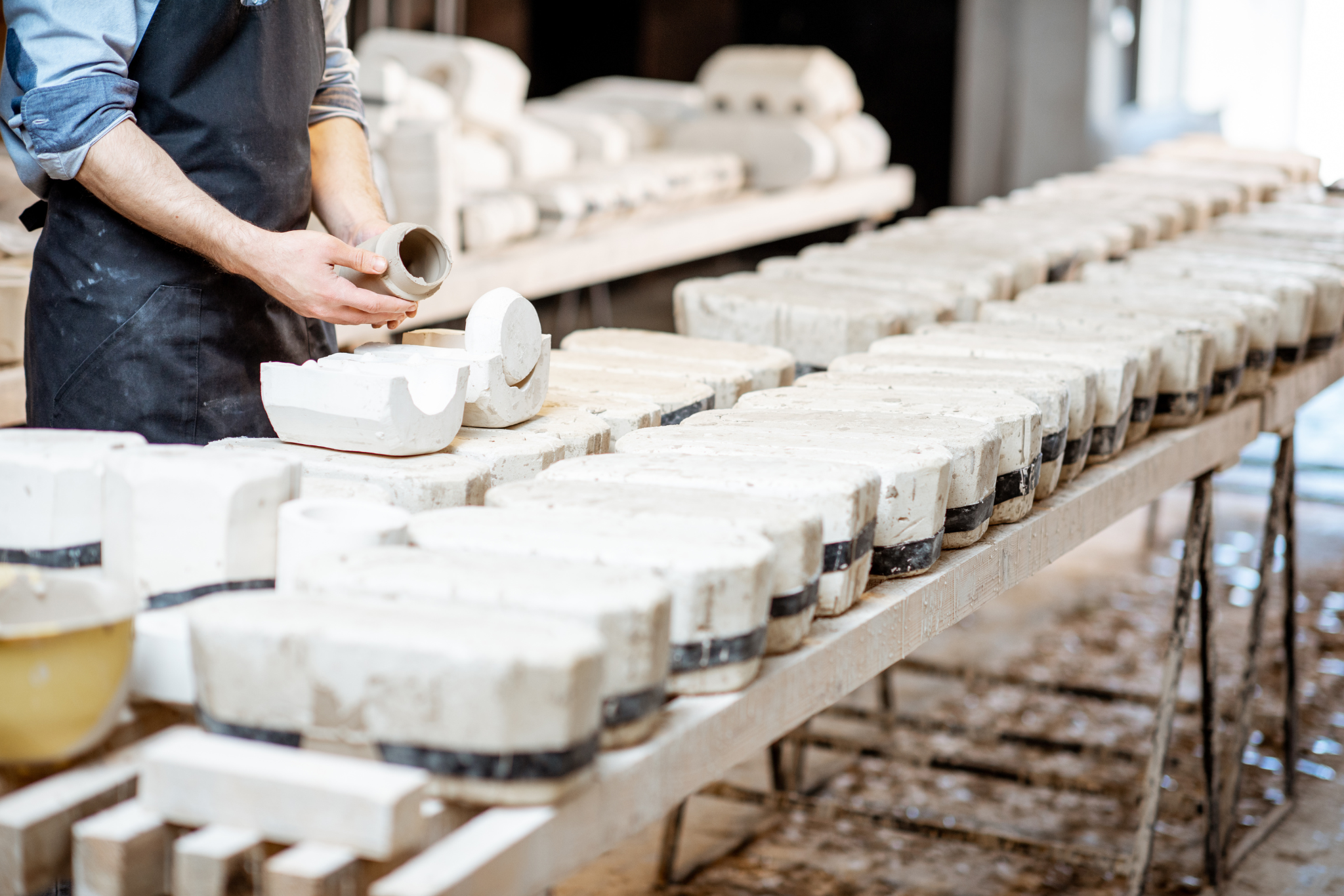
Why the strongest products aren't the fastest, cheapest, or most innovative… they're the most intentionally balanced
There's a version of product development that looks like optimization. Find the cheapest way to make something. Or the fastest. Or be the most innovative thing on the shelf. Pick the one variable that matters most, and then chase it down.
In housewares, that version rarely holds up for very long.
A product isn't a single number that needs to be minimized or a single idea that should be maximized. It's a detailed set of competing priorities that all pull on each other at once. Push hard on innovation, and cost moves. Push hard on speed, and complexity has to give somewhere. Chase the lowest landed cost, and you may have to compromise on the very details that made the concept worth doing in the first place.
That's the reality behind every product that earns a place on the shelf and comes back for reorders. The strongest products aren't the ones that win on a single dimension. They're the ones where the tradeoffs were understood early, weighed honestly, and balanced with purpose.
At Magenta, that balancing act is a big part of what Sourcing and Product Development actually do. Our role is often less about finding the single "best" answer and more about helping teams navigate tradeoffs while ideas are still flexible, before those decisions harden into production problems.
Here's how we think about the tensions that shape product development, and what it looks like when they all show up at once.
There's No Single Dial to Turn
Every product decision touches multiple variables at the same time: timeline, cost, quality, complexity, and execution. Move one, and the others move with it.
That's why we don't frame development as a search for the optimal answer to one question. We see it as a series of intentional decisions across tensions that show up on nearly every program:
- Cost vs. innovation: What makes a product special often adds cost. The goal is to protect the idea while keeping it commercially viable.
- Complexity vs. speed: Every added component, technique, or supplier introduces coordination, and coordination takes time.
- Quality vs. everything: Durability, repeatability, and consistency can't simply be the things that give way when other priorities apply pressure.
- Price point vs. design intent: A product has to work within its intended retail tier without losing the details that make it worth buying.
None of these tensions has a "correct" resolution in the abstract. The right answer depends on the product, the partner, the category, and the price point it needs to reach.
What matters is that the tradeoff is made deliberately, by the right people, early enough in the process to actually do something about it.
Where the Tradeoffs Actually Live
Tradeoffs aren't theoretical. They show up in very specific decisions throughout development, sometimes in ways that aren't obvious until a product reaches sampling or production.
Technique Stacking
A single, elevated finish can make a piece feel special. Stack several techniques on one product, such as a reactive glaze, hand-applied decal, embossed form, and metallic accent, and it can feel extraordinary.
It can also multiply the ways a product can drift out of spec.
Each added technique introduces another variable that has to be controlled across a production run. Decoration alignment, color consistency, and repeatability all become harder as techniques pile up.
The question isn't whether the combination looks good in a sample. It's whether that combination can hold together consistently across thousands of units, and whether the customer-perceived value justifies the added cost and production risk.
Sometimes the right decision is to keep every detail because those details are what make the product. Other times, simplifying one technique protects the overall concept without sacrificing what matters most.
That's the kind of decision that is much easier to make when Sourcing and Product Development are part of the conversation early.
Material Selection
Material is one of the earliest tradeoffs, and one of the most consequential.
The choice between ceramic, glass, wood, silicone, melamine, or metal isn't only an aesthetic decision. It influences cost, weight, durability, decoration options, manufacturing partners, freight, and how the product survives both shipping and retail life.
Sometimes the material that looks right on paper creates unexpected challenges once a product moves into production.
Our Pumpkin Candy Jar with Glow-in-the-Dark Decal is one example.
.png)
The original material specification for the large figural candy jar was stoneware, which offered the premium look and feel the design called for. During early production, however, the factory encountered several issues, including cracking around the opening, glaze pooling, and rim deformation during firing.
Those issues increased production risk and threatened the project timeline.
Rather than compromise on the design itself, we worked with the factory to evaluate whether another material could provide better production stability. The decision was made to change the material from stoneware to dolomite, which offered better dimensional stability for this type of large figural form and improved production consistency.
Because a material change can affect both appearance and performance, a new Pre-Production Sample (PPS) was produced and submitted for buyer approval before moving forward.
The result wasn't simply a different material. It was a decision that balanced manufacturability, quality, and timing while preserving the intent of the product.
That's the reality of material selection: sometimes the most important material decision happens after the original material has already been chosen.
Factory Capability Considerations
Not every factory can execute every technique to the same standard. Matching the right design to the right production partner is one of the highest-leverage decisions in the entire process.
A capable partner with the right equipment and experience can make an ambitious idea repeatable. The wrong match can make even a straightforward product inconsistent.
This becomes especially important when a product has specific regulatory requirements.
For example, not every factory is equipped to produce on-glaze decals that consistently meet California Proposition 65 (CA65) testing requirements.
On-glaze decals can be particularly sensitive to contamination from the kiln environment during firing. Consistently meeting CA65 requirements requires strong process controls, appropriate kiln management, and experience with the decoration technique.
In these cases, sourcing isn't simply about finding a factory that can technically produce the item. It's about finding a factory that can produce it reliably, repeatedly, and within the requirements the finished product has to meet.
Selecting a partner with proven capability in CA65-compliant on-glaze decoration can reduce production risk, avoid costly rework, and keep the product aligned with both regulatory standards and customer expectations.
This is why sourcing comes into the conversation early rather than after the design is locked. Understanding what a factory can reliably do at scale keeps ideas grounded in real-world manufacturing possibilities before a capability gap becomes an expensive problem.
Retail Price Point Alignment
Every one of these choices eventually meets a number.
A product has to land within its intended retail price tier, and small decisions that make sense individually can gradually push a product beyond where it needs to be.
Aligning to price isn't about stripping a product down. It's a strategic conversation about how to protect the design elements that matter most while still landing in the tier where the product is meant to sell.
Sometimes that means simplifying a technique. Sometimes it means changing a material. And sometimes the right answer is finding a manufacturing partner whose capabilities and cost structure allow the original design to stay intact.
The Ross 2024 Harvest collection is a good example.
From the beginning, the program had to meet a very competitive retail price point, making cost a critical consideration throughout development. After evaluating multiple manufacturing options, we assigned the program to Winmart, one of the few vendors capable of meeting Ross's target cost while maintaining the required quality standards.
Their manufacturing capabilities and cost structure allowed us to preserve the intended product design without requiring major changes to materials or decoration techniques. Their competitive pricing ultimately helped us secure the business and win the orders.
In this case, the solution wasn't necessarily to make the product less ambitious. It was to find the right manufacturing partner to make the existing idea commercially viable.
Quality Implications of Every Decision
Underneath all of it, quality is the line that simply can't move.
A faster timeline, a lower cost, or a more ambitious technique isn't worth much if the product can't be reproduced consistently or won't hold up in a customer's hands.
Quality is built into every earlier tradeoff.
A material choice can affect durability. A technique can affect consistency. A factory decision can affect repeatability. A cost reduction can introduce a quality risk that isn't visible until thousands of units are already in production.
The strongest development decisions account for those implications before they become problems.
Developing a Singing Ceramic Product
Few products bring every one of these tensions to the surface at once. A singing ceramic piece does.
The innovation itself was clear and compelling: integrate sound functionality directly into a ceramic tabletop item, create a differentiated consumer experience, and move beyond traditional drinkware and tabletop into something genuinely new on the shelf.
The idea was exciting.
.png)
Inventing a singing ceramic product wasn't the biggest challenge. The harder part was developing a product that could meet retail price expectations, pass compliance requirements, maintain product quality, and be manufactured consistently at scale.
That's where the tradeoffs showed up, one after another.
Innovation vs. Cost
Adding sound meant adding components, and additional components meant additional bill-of-materials cost.
The product still had to remain commercially viable at retail. So the question wasn't simply, "Can we add sound?" It was, "Can we add sound in a way that keeps the product within a price tier that actually works on shelf?"
Every component decision had to be weighed against the number the finished product needed to hit.
Innovation vs. Complexity
A standard ceramic item moves through a familiar production path. This one didn't.
Integrating electronics into ceramic manufacturing introduced assembly requirements that a typical piece never has, along with additional coordination between the ceramic production partner and the sound-component suppliers.
Two very different manufacturing worlds had to work together as one product.
That meant additional communication, additional testing, and additional opportunities for something to fall out of alignment.
Innovation vs. Quality
The product still had to behave like the housewares item it was.
The sound housing needed to be removable so the piece could meet everyday durability expectations. Dishwasher and microwave considerations had to be addressed rather than assumed away.
A beautiful, clever product that couldn't survive normal use wouldn't have been a real product at all.
The innovation had to work within the expectations consumers already have for the category.
Innovation vs. Compliance
The moment electronic components entered a tabletop item, the development process changed.
Electronics introduced additional testing requirements, and safety and regulatory reviews became part of the work rather than an afterthought.
These weren't optional steps. They were part of what made the product legitimately sellable.
Innovation vs. Timeline
All of that added up to a longer road.
The piece required more development rounds than a standard ceramic item and additional validation before it was production-ready. The timeline had to account for a product that was, in effect, two very different products learning to work together as one.
That additional time wasn't a failure of efficiency. It was part of what the product required to be developed responsibly.
None of these tensions had an obvious answer on its own.
Solve only for cost, and the innovation disappears. Solve only for innovation, and the product may never clear compliance or hit its price point. Solve only for speed, and the development process can leave too little room to validate what matters.
The work was in holding all of them at once and finding the path where the idea survived and the product could still be made, sold, and trusted.
That's exactly where Sourcing and Product Development create value. Not by choosing innovation over practicality, or practicality over innovation, but by helping the team understand the relationship between both before a tradeoff becomes a production issue.
Why Early Tradeoff Conversations Matter
The singing ceramic product is an unusually vivid example, but the lesson behind it applies to nearly every program we develop.
The difference between a product that launches and a product that lasts is rarely a single brilliant decision. It's a series of tradeoffs that are made early, together, and on purpose.
When those conversations happen late, the options begin to narrow.
A feasibility question discovered after sampling means rework. An alignment gap means another sampling round and a slipped timeline. A cost that drifted unchecked means a product that no longer fits its intended tier. A factory capability issue discovered too late can mean changing the design after the design has already been approved.
The tensions don't disappear when they're ignored. They just resurface later, when they're much more expensive to resolve.
This is the same principle behind why we build products through cross-functional collaboration rather than a series of handoffs, and why every stage of our design-to-shelf process has to earn its place.
Tradeoffs are easiest to deal with while the ideas are still flexible and the right people are still in the room.
The Takeaway
Product development isn't about optimizing a single variable.
It's about balancing competing priorities such as speed, cost, complexity, innovation, quality, and price point, then deliberately deciding where each one gives and where each one holds.
The strongest products aren't necessarily the fastest to develop, the cheapest to make, or the most innovative on the shelf. They're the ones where those tensions were understood early, weighed honestly, and balanced with intention.
That balance is what lets an ambitious idea survive contact with cost, compliance, manufacturing, and real-world use, and still feel like the product it was always meant to be.
That's the work: making innovation and practicality both hold at once.
If you're a retailer, brand, or creator with an ambitious idea that has to perform in the real world, we'd love to help you navigate the tradeoffs that turn it into shelf-ready product. Explore our partner pathways for retailers, brands, and artists and creators, browse our case studies, or reach out to start the conversation.