
Design-to-Shelf: How a Collection Comes to Life
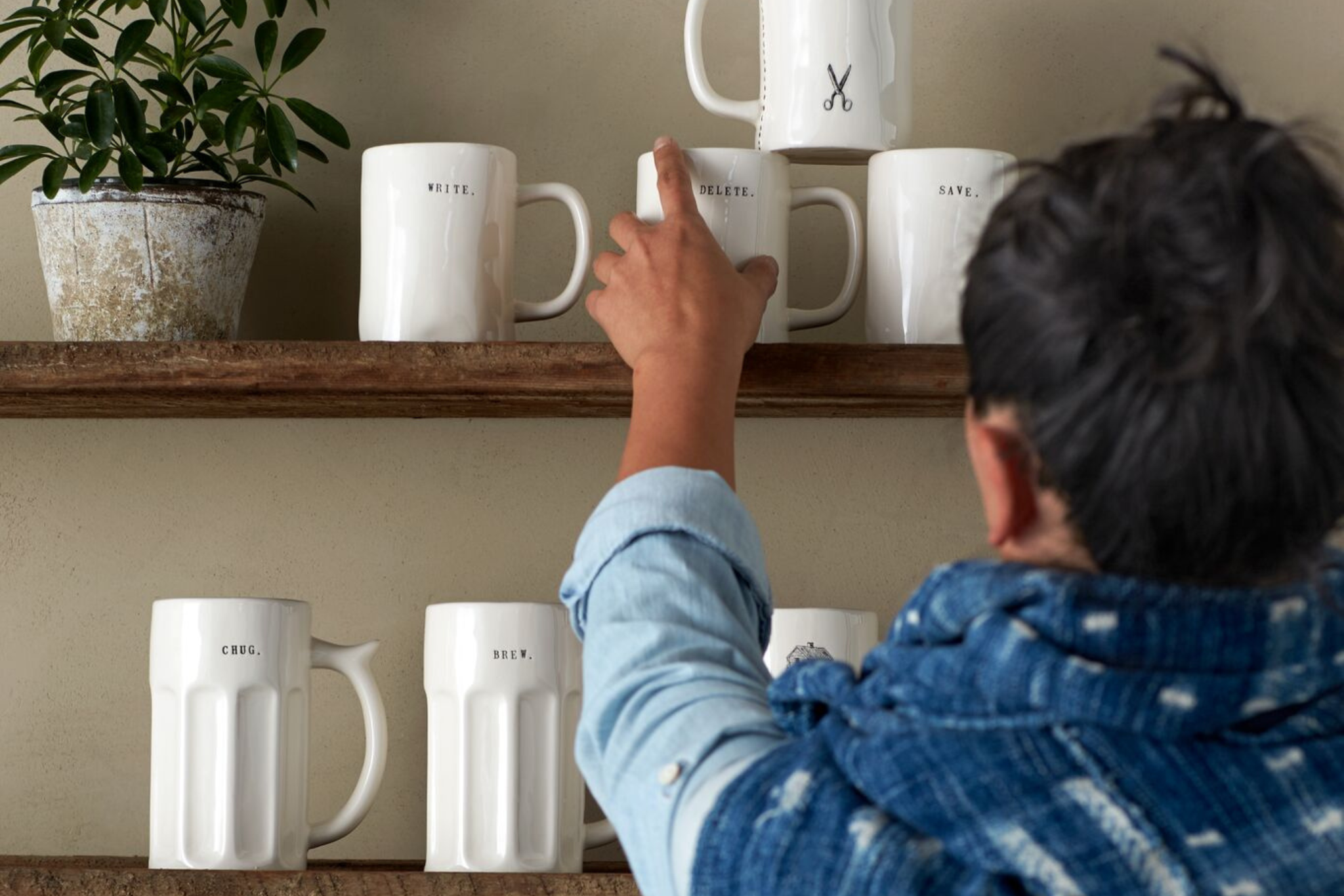
From early signals to retail-ready product, built with intention
Magenta develops more than 4,000 new products a year for retailers including TJX, Costco, World Market, and Burlington, with partners ranging from Rae Dunn to Wendy Lau’s The Kwendy Home. The collections that earn shelf space and come back for reorders share one thing we can point to: every stage, from the first trend signal to the packaging insert, has to earn its place.
That’s the discipline behind design-to-shelf. A signal earns its way into a concept. A concept earns its way into a sample. A sample earns its way onto the shelf. A product earns its way back through reorders.
Magenta is structured to do both halves of that work at once: forecast what’s coming and ship at scale into 16,000+ retail doors.
“We’re the creative-led, commercially-driven partner behind some of the most successful homewares ranges in the world. From artist collaborations to retailer exclusives, we design with purpose and deliver at scale.”
Here’s how a collection comes to life at Magenta, from the first spark to shelf-ready execution.
How Magenta thinks about trend
Trend lives in behavior. Color and pattern are the visible outputs. The real inputs are what shoppers are doing, valuing, buying, gifting, collecting, and replacing.
That’s why design-to-shelf starts with one question: what is shifting in the consumer world that will matter on shelf?
“Our work is based on trend data and genuine shopper insight.”
A collection wins when it has a point of view, a reason to exist, and enough commercial logic to perform across SKUs and reorders.
Step 1: We track trends from where they actually live
Trends don’t come from one place, and neither do we.
We track signals through global services, industry shows, and inspiration found close to home. Our Creative team spans coast to coast, which matters more than people realize. Different regions notice different signals earlier. Regional taste, climate, culture, and lifestyle all shape what feels relevant.
We look for signals across:
- consumer mindsets and lifestyle shifts
- materials and finishes
- color directions
- form and silhouette changes
- gifting and seasonal behavior
This is the part that often gets oversimplified. Trends are a pattern, not a list. The job is finding the pattern that will still feel right when the product actually hits shelves.
Step 2: We work two years ahead and pivot when retail timing changes
Strong collections need runway. We forecast up to two years out, studying where consumer taste is heading and building assortments with long-term relevance. That includes decisions a customer never sees but feels in the sell-through: form families, finish families, and category mapping that lets a theme extend.
At the same time, we move fast when retailers need us to. They need partners who can respond to:
- retailer needs and timing changes
- emerging micro-trends
- breakout moments that suddenly matter
That’s the balance the work demands: long-range clarity paired with the ability to execute in real time. Designing ahead is a discipline of intention. The runway lets us choose what matters before retail timing forces the call.
Step 3: Concepting turns signals into a collection story
This is where a trend becomes Magenta.
Concepting is the decision phase. We translate signals into a cohesive point of view that will shop cleanly, merchandise well, and hold up across SKUs. We pressure-test every concept through questions like:
- What’s the theme, and what’s the emotional hook?
- What should the customer feel when they see it on shelf?
- What’s the palette and material direction?
- What techniques make it feel elevated without breaking the price tier?
- What product categories will bring the story to life?
The goal is cohesion. Each piece should stand on its own, and the set should feel stronger together.
You see this clearly in The Kwendy Home by Magenta collections. Across multiple seasonal drops, including Halloween and Christmas, the challenge wasn’t just creating something new. It was creating something that still felt unmistakably Wendy. We built that cohesion through form and detail, carrying signature elements across collections so they connected at a glance. The village-inspired canisters are a clear example. Each season introduced its own color palette and surface story, while the underlying shape and structure stayed consistent. That continuity let every drop feel fresh and still reinforced a recognizable identity customers could come back to and build on.
.png)
This is also where we design with channel reality in mind. A collection is a retail story before anything else. It needs a beginning, a middle, and a path to expansion.
Step 4: Sampling shows us what’s real and what needs to be fixed
Sampling is where product development becomes tangible and where the real learning starts.
We review samples for:
- proportion and balance
- usability and comfort, especially in drinkware
- finish and decoration consistency
- how the product reads under real lighting
- how the collection feels across SKUs
Then we refine, because product development is iterative and the best results come from being willing to adjust the details until everything clicks. This is where the work shifts from creative exploration to design discipline.
In the Kwendy collection, we had a glass mug with a handle that looked beautiful on the first sample. The shape was unique and expressive, and it stood out immediately. Then somebody picked it up. The handle felt awkward in hand and didn’t offer the comfort or balance you expect from something you actually use. We refined the form, adjusting scale and curvature so it felt natural to hold while preserving the character that made it special. The final piece kept its personality and performed the way it needed to.

A sample can look great and still be wrong. It might be heavy. It might be fragile. It might not read consistently across the assortment. It might be beautiful and not repeatable.
A collection’s reorder rate gets set by its weakest SKU.
Step 5: Refinement turns “looks great” into “retail-ready”
This phase is less glamorous, and it’s where collections become scalable.
Refinement is where we:
- improve cohesion across the assortment
- tighten details that affect consistency and repeatability
- align execution with technique capabilities and price tier realities
- clarify packaging and storytelling so it merchandises cleanly
A lot of product stories fall apart at this stage. The idea was strong, and the details were never stabilized. The finishes drifted. The decoration didn’t hold alignment. The cost didn’t match the tier. The packaging wasn’t designed for how the product would actually ship or sit on shelf.
When that happens, the collection might still launch. It won’t last. At Magenta, refinement is the work.
Step 6: Production and packaging make it ship
Once a collection is aligned, the focus shifts to repeatable execution and real-world readiness.
Production readiness means:
- the product can be executed consistently
- the collection stays cohesive across a run
- packaging protects the product and communicates the story
- the program can support reorders and expansion
Packaging is part of the customer experience and part of what makes a collection viable at scale. It affects damage rates, returns, and how the product is perceived at first touch.
The Rae Dunn 5-piece serving set developed for Costco is a good example. The packaging had to do more than look clean on pallet. It had to protect multiple ceramic components through high-volume shipping, meet strict durability and drop-test standards, and hold up across handling from distribution to warehouse floor to cart. We worked through multiple rounds of structural refinement, adjusting inserts, spacing, and material strength to reduce movement and prevent breakage without overbuilding the package. At the same time, the exterior had to communicate the product clearly and simply, so customers could understand the value and contents instantly in a high-traffic environment. Every detail, from protection to presentation, had to perform under real retail conditions.
- protects the product through shipping, handling, and retail life
- makes the story clear in plain English on shelf
That’s performance you can measure in damage rates and sell-through.
.png)
The Magenta Showcase: where it all comes together
Multiple times a year, our Magenta Showcase brings future-forward trends, new licenses, and ready-to-buy product into one place.
It’s where early signals become shelf-ready assortments, and where retailers see what’s next clearly and confidently. It’s also where buyer enablement matters: flipbooks, one-pagers, proof tiles, and clear storytelling that supports meeting-to-preview-to-PO.
The Showcase is a decision moment for buyers.
Retail takeaways
Collections win in retail when they have a clear story, strong merchandising logic, and consistency that holds up across production and reorders.
Here’s what our design-to-shelf approach is built to deliver:
- Trend clarity: assortments grounded in real consumer signals, not guesswork
- Cohesive storytelling: collections that shop easily and merchandise cleanly
- Cross-category strength: themes designed to extend across tabletop categories
- Retail readiness: details refined for consistency, scalability, and reorder potential
- Speed with intention: long-range forecasting paired with the ability to respond to retail needs
The takeaway
At Magenta, every step has to earn its place. Process is how creative work becomes shelf-ready product that performs.
From trend forecasting to concepting to sampling to packaging, design-to-shelf is the discipline of protecting what makes a collection special while making it repeatable, scalable, and commercially viable.
A collection succeeds when it reorders. That’s what we build for.
If you’re a retailer, brand, or creator looking for a housewares partner who designs with purpose and delivers at scale, explore our Partner pathways and case studies, then reach out to start the conversation.
"Never content with being a one-dimensional supplier, we’ve developed an end-to-end housewares production offering.”